



Understanding Your Transmission’s Anatomy
Your car’s transmission performs one of the most important functions in your vehicle. Understanding how it works can help you realize when it isn’t functioning correctly and how to avoid practices that may damage it. Read on for some insight into this fundamental part of your vehicle and the differences between automatic and manual transmissions.
The transmission of your vehicle can be described as a funnel. It takes very narrow outputs of energy from the engine, and translates it to a large range of speeds in a variety of ways. For instance, on flat ground, driving at 50 mph can be done with low RPM in a higher gear than if you were trying to maintain 50 mph going up a steep incline.
Worried About Your Transmission?
Visit your nearest locally owned AAMCO Colorado today to get a complete checkup to ensure you are getting the most of your engine’s peformance.
Recent Posts
Categories
- AAMCO Diagnostics Center
- Air Conditioning
- Blog
- Brakes
- Brakes, Tires, & Suspension
- Check Engine Light
- Colorado Automotive Advice
- Community Involvement
- Electrical
- Electrical
- Engine
- Exhaust System
- Featured Articles
- Infographic
- Maintenance
- Muffler
- Muffler & Exhaust
- news
- Oil Change
- Online Mechanic
- Radiator
- Radiator & Cooling System
- Safety
- Services
- Suspension
- Suspension System
- Total Car Care
- Transmission
- Transmissions
- Videos
A Car Without a Transmission Is Like a One-Speed Bicycle
If it were not for the variable gearing provided by transmissions, you would have cars are stuck in a gear ratio and only able to accelerate to a certain speed. (For example, if you wanted a car to have a top speed of 100 mph, then it would be like driving a car in 4th gear all the time.) As you would soon find out, you would have no acceleration starting out with this gearing, and then you would red line almost constantly when you were on the highway. This car would wear out extremely quickly and be almost impossible to drive.
Put another way, a car without a transmission is like a one-speed bicycle—not particularly useful for anyone other than children. The gears your vehicle has are what give it usefulness and more capability.
Related: Auto Tune Up Service


The Key Difference About Between Automatic and Manual Transmissions
That said, there are several key differences between an automatic transmission and a manual transmission. Automatic vehicles have several benefits when it comes to their transmission. They tend to be less expensive to maintain, because manual transmissions use a clutch plate and at some point the clutch will need to be replaced (which is a fairly major expense.) In an automatic, hydraulic fluid is used in lieu of a clutch plate, so if you’re looking to keep down costs on transmission maintenance an automatic may be the best way to go.
Another benefit of automatic transmissions is that they allow for computer control, whereas manual transmissions generally do not. (Manuals can have automatic clutches, but this isn’t widespread.) For this reason, it’s likely a vehicle with an automatic transmission will perform better in terms of emissions and fuel economy because the engine and transmission can be synced much more closely and narrow the margin of error.
Manual Transmissions Have Benefits Too
It seems that automatic transmissions are often the best choice for the average motorist—but manual transmissions are not without benefits. In heavy duty applications, such as big-rig semis, construction equipment, etc., manual transmissions are preferred because they’re inherently stronger and able to take more abuse. This is often the case in racing applications as well, where manual transmissions are also preferred because they weigh less than automatic transmissions.
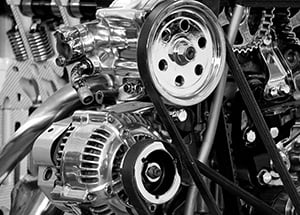
Mechanically, the main difference between a manual transmission and an automatic are the number of gear cogs. In a manual transmission, there are many gear cogs, usually one per gear, and you manually change to each gear. In an automatic, a single gear is paired with other auxiliary gears to get the same gear-range.

A Local Auto Repair Expert Can Help!
Unfortunately, your transmission may occasionally need to be repaired or rebuilt, and ignoring the problem will only make it worse: until your car literally won’t go. However, if you can screen problems with your transmission fluid and filter on your own, know the basics of transmission repair to be able to discuss the problems with your mechanic, and go to a transmission repair expert you can trust, you can save time, money, and frustration. If you notice any problems with your transmission, you’ll need to take your car to a Colorado auto repair service.
For more information on transmission maintenance and transmission repair, or to contact one of our expert transmission mechanics, visit www.aamcocolorado.com. As your Colorado transmission specialists, we’re happy to assist with all your vehicle’s needs. Those who know, go to AAMCO!
Related: Signs of a Blown Transmission
Don’t Burn Away Your Money With Malfunctioning Transmissions
Schedule an appointment today at your nearest AAMCO to get your old transmission checked or replaced or rebuilt with a high-quality transmission that will keep your vehicle running smooth for years to come.
Recent Posts from our Blog
Oil Changes & Oil Filter Replacement: What Does This Actually Do?
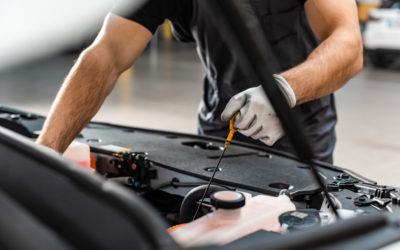
We all know oil changes are a regular part of car maintenance. But do you know what an oil change and oil filter replacement does for your car? Your car’s engine is a complex system of moving parts and your engine oil and oil filter play an important role in keeping...
read more
First 3 Things to Check if Your AC Stops Working
Having trouble staying cool this summer? When your car’s AC stops working, it can make any drive feel like a chore. Finding the problem behind your car’s AC trouble can feel tricky, but there are a few key areas where you can start looking. We’ll take a look at three...
read more
Top 5 Car Skills Your Teens Should Learn
It’s important to help your teenage kids become more comfortable around cars and understand basic car care. While much of car care is about knowing when to bring your car to an auto repair shop, there are also certain tasks that can be done at home, as well as ways to...
read more
Oil Changes & Oil Filter Replacement: What Does This Actually Do?
We all know oil changes are a regular part of car maintenance. But do you know what an oil change and oil filter replacement does for your car? Your car’s engine is a complex system of moving parts and your engine oil and oil filter play an important role in keeping...
read more
First 3 Things to Check if Your AC Stops Working
Having trouble staying cool this summer? When your car’s AC stops working, it can make any drive feel like a chore. Finding the problem behind your car’s AC trouble can feel tricky, but there are a few key areas where you can start looking. We’ll take a look at three...
read more
Top 5 Car Skills Your Teens Should Learn
It’s important to help your teenage kids become more comfortable around cars and understand basic car care. While much of car care is about knowing when to bring your car to an auto repair shop, there are also certain tasks that can be done at home, as well as ways to...
read more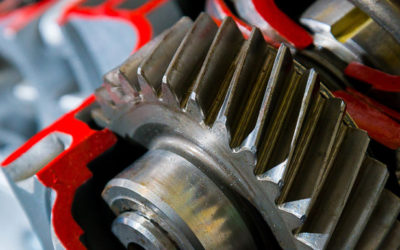
Protected: How to Check if Your Car Repairs are Covered by Insurance
Password Protected
To view this protected post, enter the password below:

Navigate our Blog
Recent Posts
Categories
- AAMCO Diagnostics Center
- Air Conditioning
- Blog
- Brakes
- Brakes, Tires, & Suspension
- Check Engine Light
- Colorado Automotive Advice
- Community Involvement
- Electrical
- Electrical
- Engine
- Exhaust System
- Featured Articles
- Infographic
- Maintenance
- Muffler
- Muffler & Exhaust
- news
- Oil Change
- Online Mechanic
- Radiator
- Radiator & Cooling System
- Safety
- Services
- Suspension
- Suspension System
- Total Car Care
- Transmission
- Transmissions
- Videos