



Why is your transmission is overheating?
Most transmission problems are a result of overheating.
- Low fluid is a transmission killer.
- Old, worn out, or burned fluid will cause the transmission to run hot.
- Transmission slipping is another hint that the fluid is low and old.
- A defective solenoid can cause the transmission to run hot.
- Driving habits, conditions, and weather are other possible causes of transmission overheating.
Post Navigation
1. be aware of possible causes
2. Low fluid is a transmission killer
3. How to prevent transmission overheating
4. AAMCO Can Help!
5. More From Our Blog
If your transmission is running hot, be aware of possible causes.
Most transmission problems are a result of overheating.
Reasons for overheating include low fluid levels, leaks, burned, old or dirty fluid, or problems with the solenoid. You can ensure the long life and efficient performance of your transmission – and your car – by doing some things to make sure it does not run too hot.
Related: AAMCO Colorado Car Tune Up Service
Recent Posts
Categories
- AAMCO Diagnostics Center
- Air Conditioning
- Blog
- Brakes
- Brakes, Tires, & Suspension
- Check Engine Light
- Colorado Automotive Advice
- Community Involvement
- Electrical
- Electrical
- Engine
- Exhaust System
- Featured Articles
- Infographic
- Maintenance
- Muffler
- Muffler & Exhaust
- news
- Oil Change
- Online Mechanic
- Radiator
- Radiator & Cooling System
- Safety
- Services
- Suspension
- Suspension System
- Total Car Care
- Transmission
- Transmissions
- Videos
Low fluid is a transmission killer.
Low transmission fluid results in excessive wear and tear, which causes the transmission to run hot, and eventually fail.
Additionally, pressure is crucial to the overall effectiveness of the fluid. Without enough transmission fluid, there will not be enough pressure for the transmission to operate optimally, and it will start showing signs of trouble, such as slipping, hard shifting, strange noises, and overheating.
Transmission fluid is the lifeblood of your transmission.
It cools and lubricates the many moving parts of the transmission. You can check fluid levels by pulling the transmission dipstick. Refer to your owner’s manual for location of the dipstick and the right levels to look for. If you have low fluid levels, you’ll need to add more fluid. Again, check your vehicle owner’s guide for the type of fluid and amounts recommended by the manufacturer.
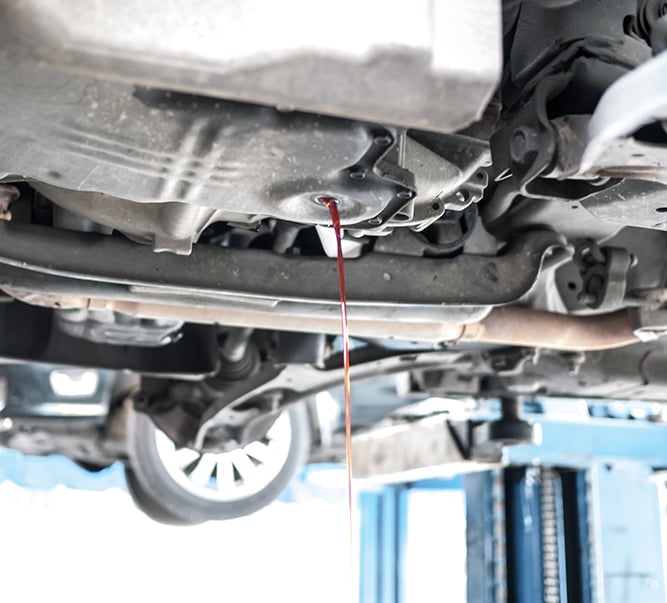
Old, worn out, or burned fluid will cause the transmission to run hot.
The color of the transmission fluid will tell you if it’s time for a change. Fresh, effective transmission fluid will get you many happy miles down the road. Old, worn out, or burned fluid will leave you stuck at the side of that road, possibly with irreparable damage. Transmission fluid wears out over time and can become contaminated with dirt and grit. Additionally, burned transmission fluid results from transmission heat – and transmission heat results from low fluid or old, ineffective fluid that needs to be changed. Either way, low or bad fluid can cause transmission heat, and transmission heat can burn the fluid – a vicious cycle that ends in transmission failure. Keep your transmission fluid clean and fresh and it most likely won’t burn. If the transmission fluid is burning, you will notice a strong smell that is difficult to describe, but can’t be missed. It’s been described as burning plastic or burned toast.
Though transmission fluid comes in different colors these days, the majority of brands are bright, translucent red or pink. Worn out or burned transmission fluid will be dark red, brown, or even black, possibly thick and filled with gunk. The darker the color, the older and more worn out it is, which is evidence that it needs to be changed. If it’s burned, it will smell strongly and you will know your transmission has been running hot and is need of attention. Good transmission fluid should be translucent and clean, with no visible discoloration or contaminants.
| New | |
| Good/OK | |
| Time to Change | |
| Burned/ Ineffective |
Transmission slipping is another hint that the fluid is low and old.
Reasons for the transmission slipping include things such as worn parts and gears, or a bad clutch, but these are not as common as just plain low or ineffective fluid. Transmission slipping should not be ignored because it’s a sign of problems that should be addressed immediately – including an overheating transmission caused by bad fluid. So, a good examination of the fluid level and its condition might be just what you need. If the slipping persists, then it’s time to take your car to a transmission technician for further diagnosis.
A defective solenoid can cause the transmission to run hot.
The transmission solenoid regulates how much fluid is passed through the transmission. If it malfunctions, not enough fluid is pumped into the transmission, which will result in the transmission overheating. A defective solenoid has to be replaced. A thorough Vehicle Courtesy Check of your transmission overheating issues should be able to identify the solenoid as the problem, but sometimes the underlying circuitry can be the issue. Either way, the solenoid should be checked if all other issues have been addressed and your transmission still overheats.
Be aware of other possible causes of transmission overheating.
Towing heavy loads makes your transmission work harder than normal. Heavy towing means that your transmission should be serviced more often. You should frequently check fluid levels and colors, and be careful not to exceed load limits.
Driving habits, conditions, and weather. Urban, or city driving involves a lot of stop and go traffic. The constant accelerating and slowing, shifting up and down through gears, causes your transmission to work harder than normal. Hot weather contributes to an overheating transmission by raising the resting fluid temperature, so it’s warmer than normal from the get-go. Combined with city driving, your transmission fluid is bound to heat up and wear out sooner, so it pays to check it frequently.
Don’t GEt heated by Car Problems
No matter the season, AAMCO Colorado is staying open, practicing safe healthy measures, in order to provide essential car maintenance and diagnostic services to help our communities. Stay safe, and get your car maintained here.
What you can do to prevent transmission overheating.
Check the transmission fluid level and color.
By checking the fluid level about once a month, you’ll not only ensure there is always enough fluid for adequate lubrication and pressure in the transmission, you’ll get to examine the color of the fluid. By simply checking the transmission fluid, you’ll be able to spot low fluid levels, as well as dirty or burned fluid before they become problems and cause expensive damage. It’s a good preventative measure you can take that is easy and quick. The more often you do it, the more smoothly your transmission will run, and the more efficient your car will be overall.
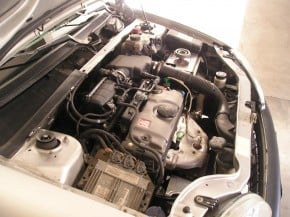
Change the transmission fluid according to your manufacturer’s recommended maintenance schedule.
The frequency of fluid change can be from 30,000 to 60,000 miles, but is dependent on the type of vehicle you drive, your driving habits and requirements, and the conditions in which you drive. If you tow heavy loads or drive in harsh conditions, the frequency of transmission fluid changes will probably be higher than average.
Consider a transmission cooler to help your car’s cooling system.
Your car’s radiator does the job of cooling the transmission, so be sure to maintain it. You should check the coolant from time to time, and change it about every two years. If you tow or haul heavy loads, consider getting a transmission cooler. A transmission cooler provides extra cooling power to your car’s cooling system, assisting it in preventing the many hot, running systems in the engine from overheating. The best transmission cooler is a stack plate cooler. It is attached to the front of the radiator to help keep the transmission fluid cool, thereby helping the performance and extending the life of your transmission.
Related: My Car Rolls When I Put It In Park | Read more…
Related: Change Your Transmission Filter | Read more…
Related: Sounds Your Car Makes When It Needs Repairs | Read more…
AAMCO Colorado Can Diagnose Engine Shaking
If your car or truck is struggling with an overheating transmission you need to bring it into your local AAMCO Colorado to help diagnose your vehicle quickly. Let us get you back on the road safely! We offer a free Vehicle Courtesy Check – if you’re concerned about the health of your transmission, don’t wait to contact an AAMCO Colorado location near you or schedule an appointment online today.
If you are having car troubles find your local AAMCO Colorado and call or book online today to visit us today.
Recent Posts from Our Blog
Oil Changes & Oil Filter Replacement: What Does This Actually Do?
We all know oil changes are a regular part of car maintenance. But do you know what an oil change and oil filter replacement does for your car? Your car’s engine is a complex system of moving parts and your engine oil and oil filter play an important role in keeping...
read more
First 3 Things to Check if Your AC Stops Working
Having trouble staying cool this summer? When your car’s AC stops working, it can make any drive feel like a chore. Finding the problem behind your car’s AC trouble can feel tricky, but there are a few key areas where you can start looking. We’ll take a look at three...
read more
Top 5 Car Skills Your Teens Should Learn
It’s important to help your teenage kids become more comfortable around cars and understand basic car care. While much of car care is about knowing when to bring your car to an auto repair shop, there are also certain tasks that can be done at home, as well as ways to...
read more
Oil Changes & Oil Filter Replacement: What Does This Actually Do?
We all know oil changes are a regular part of car maintenance. But do you know what an oil change and oil filter replacement does for your car? Your car’s engine is a complex system of moving parts and your engine oil and oil filter play an important role in keeping...
read more
First 3 Things to Check if Your AC Stops Working
Having trouble staying cool this summer? When your car’s AC stops working, it can make any drive feel like a chore. Finding the problem behind your car’s AC trouble can feel tricky, but there are a few key areas where you can start looking. We’ll take a look at three...
read more
Top 5 Car Skills Your Teens Should Learn
It’s important to help your teenage kids become more comfortable around cars and understand basic car care. While much of car care is about knowing when to bring your car to an auto repair shop, there are also certain tasks that can be done at home, as well as ways to...
read more
Protected: How to Check if Your Car Repairs are Covered by Insurance
Password Protected
To view this protected post, enter the password below:

Navigate our Blog
Recent Posts
Categories
- AAMCO Diagnostics Center
- Air Conditioning
- Blog
- Brakes
- Brakes, Tires, & Suspension
- Check Engine Light
- Colorado Automotive Advice
- Community Involvement
- Electrical
- Electrical
- Engine
- Exhaust System
- Featured Articles
- Infographic
- Maintenance
- Muffler
- Muffler & Exhaust
- news
- Oil Change
- Online Mechanic
- Radiator
- Radiator & Cooling System
- Safety
- Services
- Suspension
- Suspension System
- Total Car Care
- Transmission
- Transmissions
- Videos
I’m a tough trucker,I bring down heavy rocks from top of mountain.I use low gear and exhaust brake with service brake.its hardly possible to do.my Q is,how much my gear box is in danger?(overheating).what steps should I adopt for gearbox life?more ,can switch on anti slip to support braking? As some truckrs do that.thanks.
Muhammad,
There are a lot of considerations you must keep in mind when maintaining a truck – and due to heavy use trucks will often need more frequent transmission (and other systems) service. However, we can not diagnose your vehicle without seeing it in one of our service centers. If you are local to Colorado stop by one of 14 Colorado AAMCO Service centers and we can perform a free diagnostic check on your vehicle where we can access any repair needs your vehicle may have.
Thanks,
AAMCO Colorado
Hey,
My transmission works just fine. The last time when the mechanic checked the fluid, I noticed it’s in good pink. But he had to remove around 50ml of fluid to check. My car has run 70000miles so far.
1. Should I replace the oil irrespective of how it looks, and should expect a magic in how the transmission performs?
2. Or should I at least add 50ml of new fluid (that he removed) to the old fluid?
Thank you!
Amjath,
Your transmission fluid exists in a closed system, and different types of vehicles need a different amount. We suggest consulting your owner’s manual and a trusted mechanic to obtain the right fluid levels for your car. Oil changes should be performed ever 1,500-3,000 miles, and again your owner’s manual will have the service increments that are right for you.
Thanks,
AAMCO Colorado
So I have a 2095 grand Cherokee limited awd. It has a new transmission and fluid levels are good. Still throwing transmission code saying fluid to hot.
This can happen at times, sometimes the sensor is faulty and may need to be reviewed. Are you in Colorado?
This is also the reason why it is necessary to go to the auto shop from time to time to check what the problem is with your car.
My transmission failed and I had to change the gear box. The new gear box seemed fine but when I travelled long distance (about 3 hours driving, I started to see the atf temperature light come on. I stopped after about 15 minutes when I perceived the smell of burning oil. When I lifted the hood, the transmission oil was spurting out from around the dipstick Onto the engine hence the burning smell. I let it cool down, wiped off the oil as much as I could and then turned back because it was going to be another 4 hours on that trip. The surprising thing was that I drove back 3 hours without incident. No over heating signs, not atf temp alarm and no transmission problems. I’ve been using the cat for the past 10 days without any recurrence of that problem. But I’m still afraid to drive it long distance. What do I need to check? I live in Africa and the diagnostic systems are not great
My corolla 1999 model just stop moving while on motion, so I parked and started again and moved a while and stopped again, what could be the problem
The gear stopped engaging while on motion, after cooling down it will start engaging for a while and stop engaging.
Hi Valentine,
This actually could be due to a few different factors within your vehicle. Are you in Colorado? If so, give one of our locations a call for a diagnostic so we can run a few tests and get your vehicle assessed. Either way, I would highly recommend you get your vehicle checked by a professional mechanic soon before it worsens.