



Six Simple Tips to Follow If Your Brakes Fail
Having your brakes fail while driving can be an incredibly stressful situation. While we all hope it never happens to us it is best to be prepared by remembering these simple tips. If you ever find yourself in this terrifying situation, remember the tips found in this guide to help slow your car down and get you off the road safely.
- Stay Calm
- Downshift into a Lower Gear
- Gradually Apply your Parking or Emergency Brake
- Test your Brakes one more Time
- Safely Pull off the Road or out of Traffic
- Get Help
Recent Posts
Categories
- AAMCO Diagnostics Center
- Air Conditioning
- Blog
- Brakes
- Brakes, Tires, & Suspension
- Check Engine Light
- Colorado Automotive Advice
- Community Involvement
- Electrical
- Electrical
- Engine
- Exhaust System
- Featured Articles
- Infographic
- Maintenance
- Muffler
- Muffler & Exhaust
- news
- Oil Change
- Online Mechanic
- Radiator
- Radiator & Cooling System
- Safety
- Services
- Suspension
- Suspension System
- Total Car Care
- Transmission
- Transmissions
- Videos
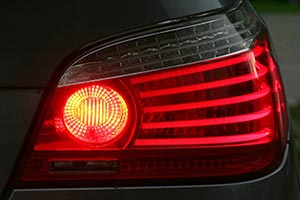
Brakes Failing? Stay Calm
Instinctively you may start panicking when your brakes go out.
Don’t panic. Having a clear head and remembering the rest of the tips in this guide are key to slowing down your vehicle safely. It’s very important that you try these tips first before doing something more drastic such as pulling off the road at top speed.
If you can, put on your emergency 4-way flashers to let other vehicles know that something is going on. If you’re following general safe driving protocols you should have a decent amount of space between you and the driver in front of you. This space is going to be invaluable in this situation, giving you the time you need to slow down your car in other ways.
Don’t turn off your car to slow it down! While this may seem like a logical step, you actually lose power steering and may need to put an automatic transmission in park to do this. Either situation is incredibly dangerous while moving, and we highly recommend slowing your car to a complete stop in a safe location before turning it off.
Related: How Brakes Work
Related: Having A Hard Time Stopping? Brakes Don’t Last Forever
Gradually Apply your Parking or Emergency Brake
Start to slow down your vehicle by slowly applying the Parking or Emergency Brake. Don’t pull it up all the way or push it down all the way- the trick here is to slowly engage the brake so it gradually slows down your car. If you engage this brake too much you may cause your car to skid, so please be careful! It’s very important to do this gradually and get a feel for how much it slows down your vehicle. In many instances this alone can get you to a complete stop, however, we recommend using this in conjunction with the rest of our tips.

Downshift to a Lower Gear
Continue to slow down your vehicle by downshifting into a lower gear. This actually utilizes your engine to slow down your vehicle.
Downshifting with an Automatic Transmission
In an automatic transmission, most shifters can actually downshift your car into lower gears. This is done with your shifter that you use to put your car into park, drive, or reverse. These shifters also typically include neutral, and more gear options for downshifting if the need occurs. If your brakes go out then this is definitely a situation where you’ll want to slowly downshift into a lower gear!
It’s smart to know how to do this before the need arises. You may want to practice when going down a steep slope or mountain first so you get the hang of how it works.
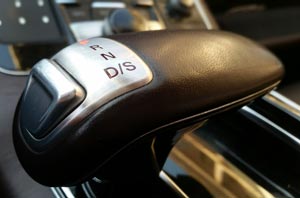
Steps for Downshifting with an Automatic Transmission
Note: Some cars have an OVERDRIVE mode, which enables the highest gear. This is sometimes a button on the shifter, or your shifter may have two separate Drive modes. Most often people always drive with OVERDRIVE enabled for highway driving and many don’t even know that it’s an option!
- Take your shifter, and move it from DRIVE to the next lower gear. This is typically a 3 or a 2, or could entail disabling OVERDRIVE mode via the button on the shifter or shifting into the second DRIVE gear.
- Your engine’s RPM gauge will rise suddenly and you may feel a slight jolt – that’s okay! This is your engine engaging a lower gear which will start to slow down the vehicle.
- If you feel a huge jolt or your engine’s RPM gauge flies into the RED, then you probably downshifted into too low of a gear. Shift into the next gear up to get your engine back into a gear more suited for your current speed.
- Continue to downshift into the next gear down to slow down your vehicle.
Downshifting with a Manual Transmission or Stick Shift
If you drive a stick shift or manual transmission vehicle downshifting is likely something you’re already quite familiar with.
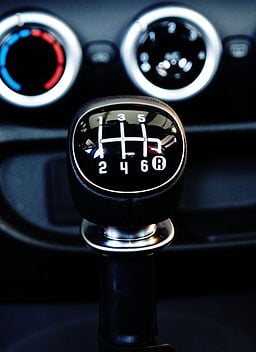
Steps for Downshifting with a Manual Transmission
- Engage your Clutch.
- Take your shifter and move it to the next lower gear. Slowly let go of the clutch, and possibly engage your gas pedal to match your engine’s RPM if your already familiar with this process.
- Your vehicle will start to slow down. If it’s not slowing down fast enough, then shift into a lower gear once again.
- If you feel a huge jolt or your engine’s RPM gauge flies into the RED, then you probably downshifted into too low of a gear. Shift into the next gear up to get your engine back into a gear more suited for your current speed.
Test Your Brakes One More Time
If you have a modern car with ABS (Anti-lock Braking System) you can test your brakes again by applying strong, consistent pressure to the brake pedal. If this does slow you down a bit but not as well as it normally does, then it’s possible you have a dual braking system and either the front or back is not engaging. A working ABS system will cause a strong vibration in the brake pedal when it is pressed hard. If you are simply having a hard time stopping, your brakes may be old or incredibly low and may need to be serviced or replaced.
Many older cars do not have ABS. If your car doesn’t have ABS then you will need to pump the brake pedal fast and hard 3-4 times to build up enough brake fluid pressure to get your brakes to engage.
Related: How to Avoid a Collision with ABS
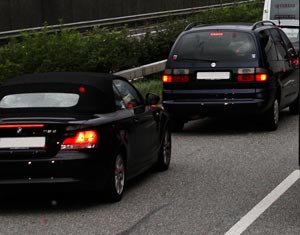
Safely Pull off the Road or out of Traffic
Once your vehicle is moving at a safe speed to pull over then be sure to navigate it to a safe space out of traffic. If you’re on a busy highway it’s important to use your 4 way flashing lights or honk your horn to warn other motorists that there is an issue and you need to pull over. Once the road is clear and it seems safe to pull over onto the shoulder or pullover lane, start to do so. After you’ve pulled over make sure you are far enough away from oncoming motorists or bikers.
Take a deep breath or twenty. At this point you can relax and move on to getting some help!
Get Help!
Once you are safely pulled over it’s time to get help. If you have AAA or a similar service they can get you tow your vehicle back to your home or to your local AAMCO for a complete brake service checkup and repair. Alternatively you can contact your local AAMCO Colorado to see if they offer free towing!
Schedule an Appointment with your local AAMCO
Want to schedule an appointment right away? Use our simple online scheduling form below and make sure your car gets serviced by Colorado’s transmission and automotive repair experts. Get a free Vehicle Courtesy Check right away!

More from our Blog
Oil Changes & Oil Filter Replacement: What Does This Actually Do?
We all know oil changes are a regular part of car maintenance. But do you know what an oil change and oil filter replacement does for your car? Your car’s engine is a complex system of moving parts and your engine oil and oil filter play an important role in keeping...
read more
First 3 Things to Check if Your AC Stops Working
Having trouble staying cool this summer? When your car’s AC stops working, it can make any drive feel like a chore. Finding the problem behind your car’s AC trouble can feel tricky, but there are a few key areas where you can start looking. We’ll take a look at three...
read more
Top 5 Car Skills Your Teens Should Learn
It’s important to help your teenage kids become more comfortable around cars and understand basic car care. While much of car care is about knowing when to bring your car to an auto repair shop, there are also certain tasks that can be done at home, as well as ways to...
read more
Oil Changes & Oil Filter Replacement: What Does This Actually Do?
We all know oil changes are a regular part of car maintenance. But do you know what an oil change and oil filter replacement does for your car? Your car’s engine is a complex system of moving parts and your engine oil and oil filter play an important role in keeping...
read more
First 3 Things to Check if Your AC Stops Working
Having trouble staying cool this summer? When your car’s AC stops working, it can make any drive feel like a chore. Finding the problem behind your car’s AC trouble can feel tricky, but there are a few key areas where you can start looking. We’ll take a look at three...
read more
Top 5 Car Skills Your Teens Should Learn
It’s important to help your teenage kids become more comfortable around cars and understand basic car care. While much of car care is about knowing when to bring your car to an auto repair shop, there are also certain tasks that can be done at home, as well as ways to...
read more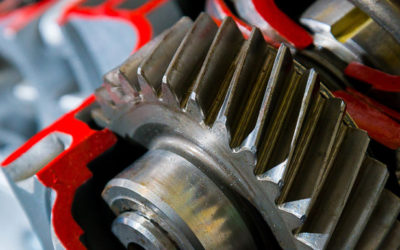
Protected: How to Check if Your Car Repairs are Covered by Insurance
Password Protected
To view this protected post, enter the password below:
Navigate our Blog
Recent Posts
Categories
- AAMCO Diagnostics Center
- Air Conditioning
- Blog
- Brakes
- Brakes, Tires, & Suspension
- Check Engine Light
- Colorado Automotive Advice
- Community Involvement
- Electrical
- Electrical
- Engine
- Exhaust System
- Featured Articles
- Infographic
- Maintenance
- Muffler
- Muffler & Exhaust
- news
- Oil Change
- Online Mechanic
- Radiator
- Radiator & Cooling System
- Safety
- Services
- Suspension
- Suspension System
- Total Car Care
- Transmission
- Transmissions
- Videos